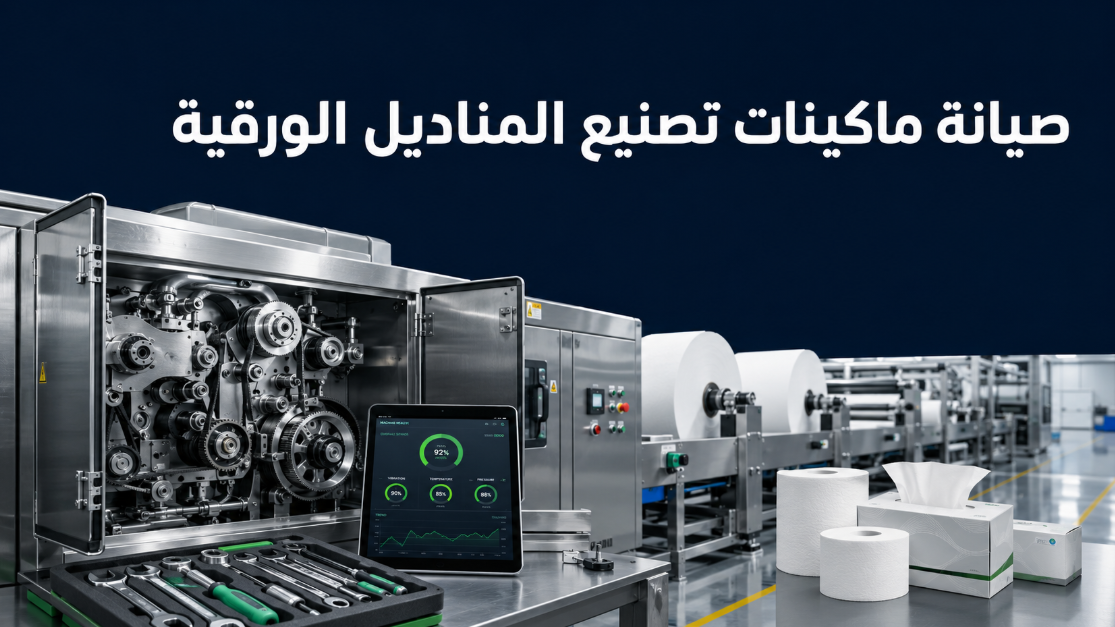
Regular tissue paper machine maintenance helps keep the production line running efficiently, reduces unexpected breakdowns, and maintains consistent folding, cutting, and packaging quality. Neglecting a small component, such as a cutting blade or feed sensor, may slow the line, increase paper waste, and produce inconsistent finished products.
Maintenance should not begin only after the machine stops. A preventive programme should cover inspection, cleaning, lubrication, and checking fast-wearing components. It should also reflect the machine type, operating hours, production capacity, and factory conditions.
You can explore tissue paper manufacturing machines and production lines to understand how line components differ according to the product type and automation level.
Why Do Tissue Machines Need Regular Maintenance?
Tissue production lines operate continuously at high speeds and contain mechanical and electrical components, control systems, and sensors. During daily operation, paper residue and dust can accumulate around feeding, folding, and cutting units. Blades, belts, and bearings also experience gradual wear.
Regular maintenance helps to:
- Reduce unexpected production downtime.
- Maintain accurate dimensions, folding, and cutting.
- Limit paper consumption and material waste.
- Identify worn components before they fail.
- Extend the machine’s operating life.
- Improve operator safety inside the factory.
- Maintain a stable production-line speed.
Signs That the Machine Needs Maintenance
A machine may continue operating even when an early fault is developing. The following signs should not be ignored:
- Unusual noise or vibration.
- Slower production than the normal operating speed.
- Irregular tissue or roll lengths.
- Repeated folding or cutting errors.
- Paper misalignment while moving through the line.
- Overheating motors or bearings.
- Sensor failure or repeated warning messages.
- An increase in defective products or material waste.
When one of these signs appears, the cause should be inspected before increasing the operating speed. Continuing production may turn a minor issue into a larger fault.
Tissue Production Line Maintenance Schedule
The schedule varies according to the manufacturer’s instructions, but the essential tasks can be organised as follows:
Daily Inspection
Daily tasks include removing paper residue, inspecting blades, sensors, and belts, and monitoring noise, temperature, and compressed-air levels. Any change in product quality or line speed should also be recorded.
Weekly Inspection
Lubrication points, belt and chain tension, connections, and the condition of folding and cutting units should be checked. Components that are difficult to reach during daily operation should also be cleaned.
Monthly and Periodic Inspection
Periodic maintenance includes checking motors, electrical panels, control and protection systems, measuring the wear of moving components, and testing emergency stops. Worn parts should be replaced according to their condition and operating hours, not only after they fail.
The Importance of Suitable Spare Parts
Using an incompatible part may affect machine accuracy or cause repeated faults. Fast-wearing parts, including blades, belts, bearings, and sensors, should therefore be identified, with a suitable stock kept inside the factory.
Having essential parts available reduces downtime when a fault occurs, especially if replacements require a long delivery period. The replacement date of each part should also be recorded to monitor its operating life and identify the reasons for unusually rapid wear.
Operator Training Is Part of Maintenance
Some faults may result from selecting an unsuitable speed, installing jumbo rolls incorrectly, or continuing to operate the line after a warning appears. Operators therefore need to understand start-up and shutdown procedures, dimension adjustments, safe cleaning, and fault reporting. They should not attempt to repair electrical components without the appropriate expertise.
Al Baraka provides installation, operation, training, and technical-support services for sanitary paper projects. You can review our market experience to learn about the company’s project coverage.
Maintain the Stability of Your Production Line
Preventive maintenance costs less than stopping an entire line or losing a large quantity of raw material. Contact Al Baraka to assess your machine, identify maintenance and spare-parts requirements, and create a plan that suits the line type and operating hours.
FAQ
When does a tissue machine require maintenance?
It requires daily inspection and periodic maintenance according to operating hours and the manufacturer’s instructions. It should be inspected immediately if unusual noise, heat, or vibration appears.
Which components require the most monitoring?
This varies by machine, but monitoring commonly includes blades, belts, bearings, sensors, and folding and cutting units.
Can production-line downtime be reduced?
Yes. Downtime can be reduced through preventive maintenance, operator training, fault recording, and keeping fast-wearing spare parts available.
Does Al Baraka provide support after installing the machines?
Yes. The Al Baraka website states that the company provides maintenance, spare parts, training, and after-sales technical support.