Choosing a tissue paper making machine does not depend only on the machine’s price or advertised speed, but also on the type of product you want to manufacture, the required production capacity, package sizes, level of automation, and the quality of available raw materials. Purchasing a machine that is not compatible with the project plan may lead to increased waste, production downtime, or producing tissues that do not meet market needs.
In this guide, we explain how a tissue paper machine works, its components, the differences between its types, the specifications that should be reviewed before purchasing, and how Al Baraka helps investors set up an integrated project instead of buying separate machines that may be difficult to operate together.
What Is a Tissue Paper Making Machine?
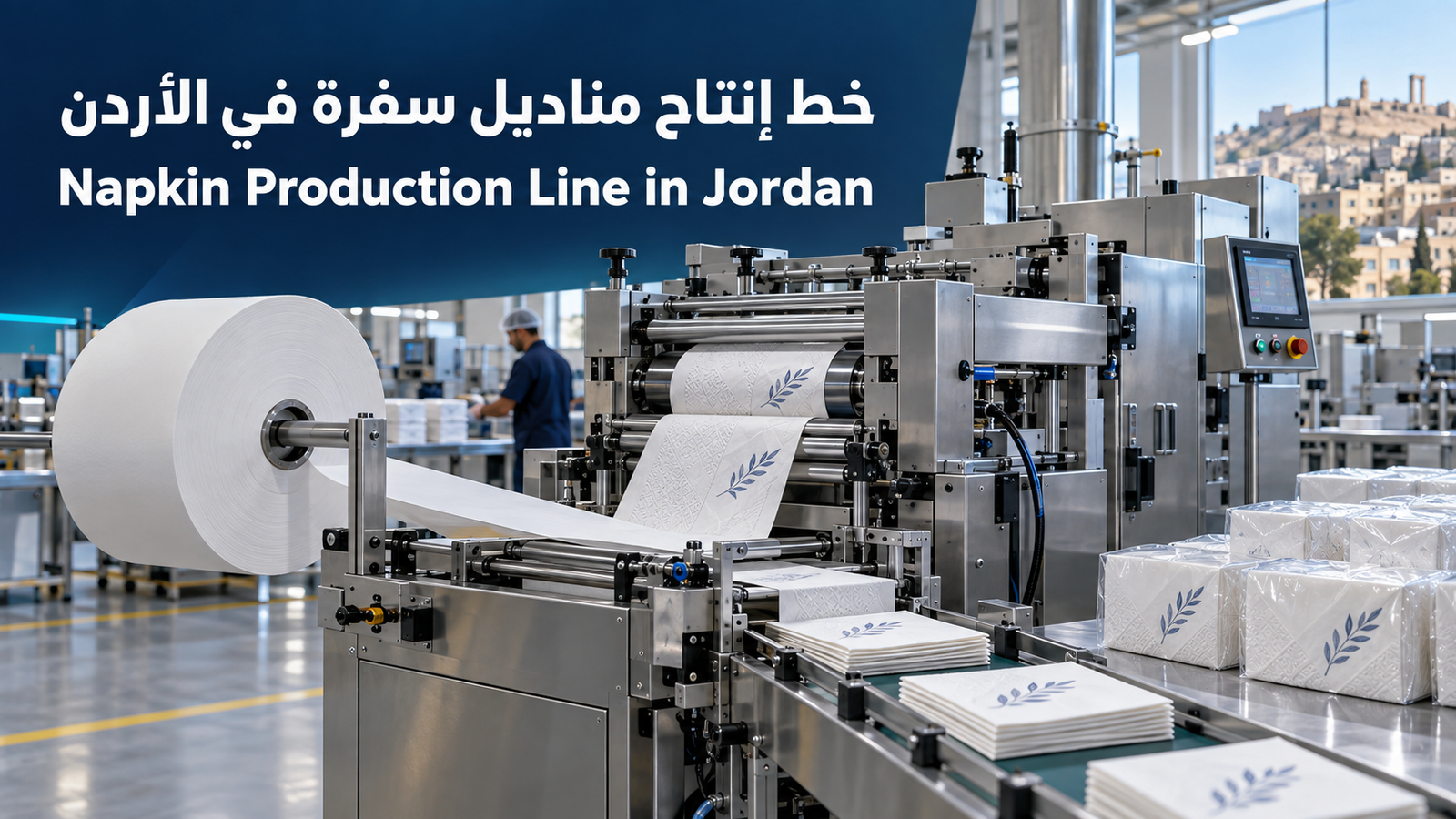
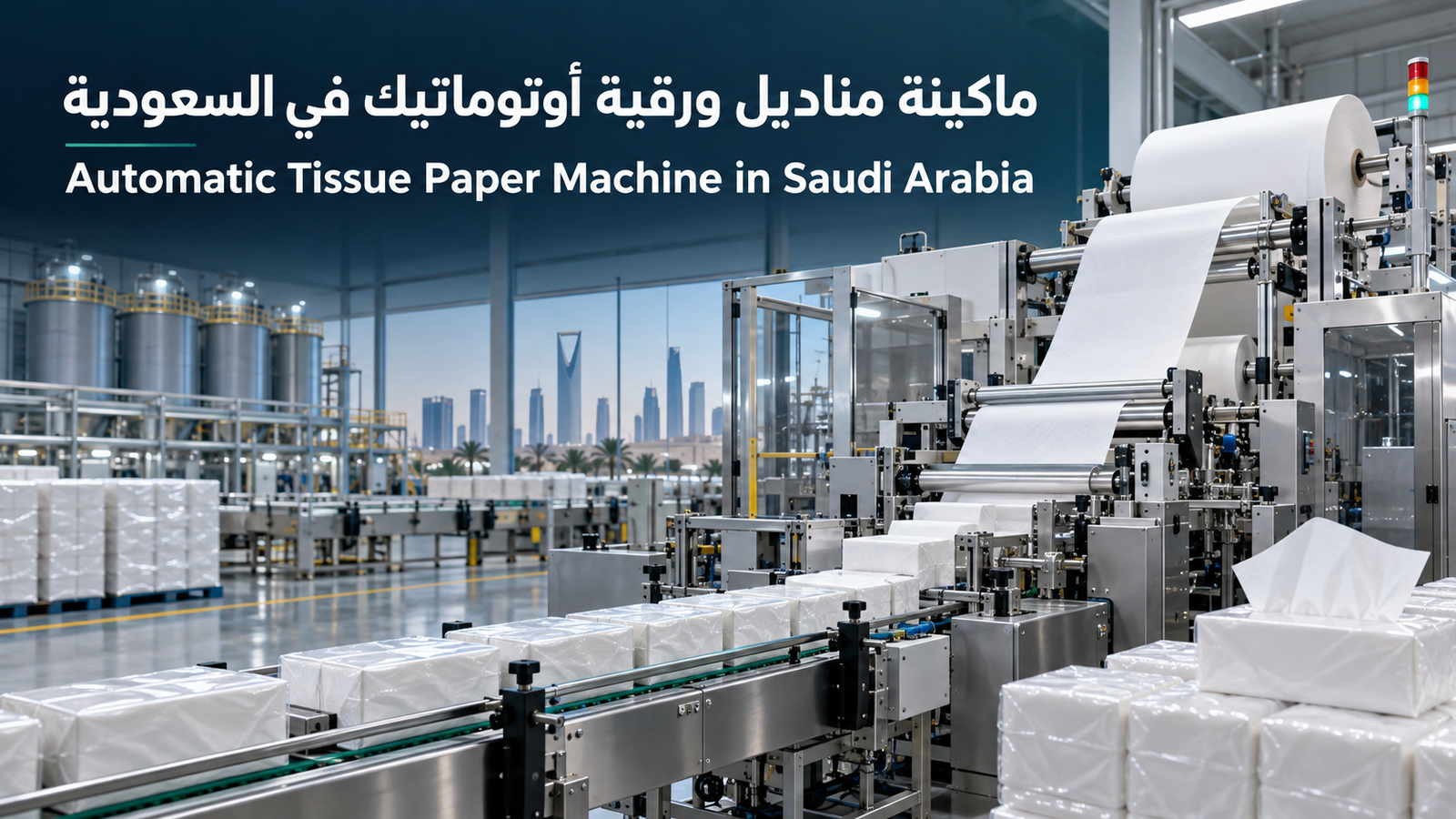
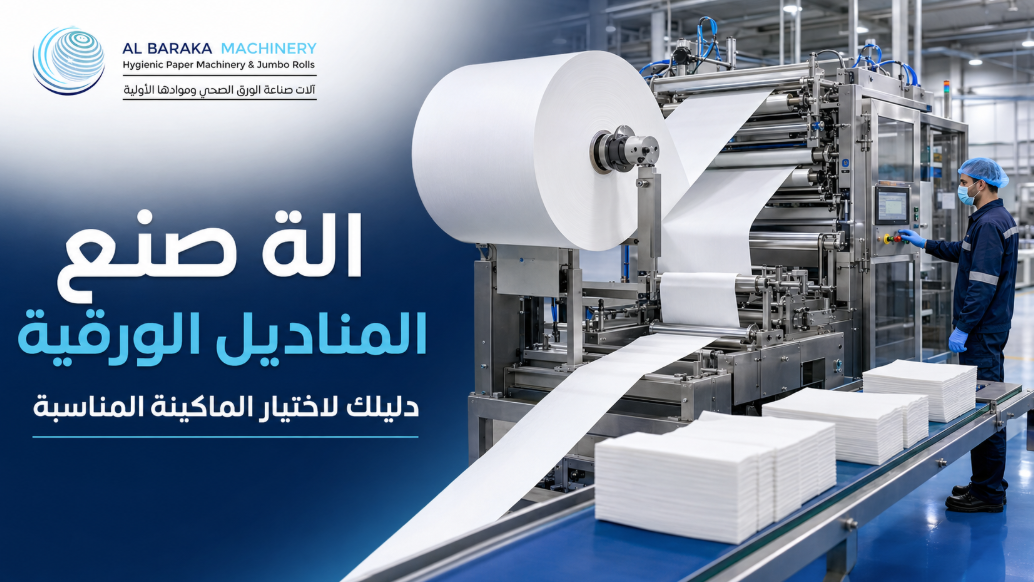
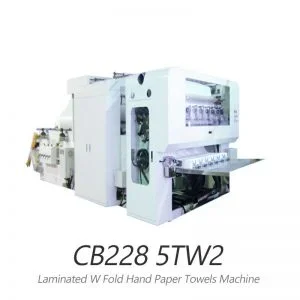
A tissue paper making machine is an industrial machine that converts large rolls of raw paper, known as jumbo rolls, into folded and cut tissues in the required sizes. It may also add embossing or printing, depending on the machine specifications.
In facial tissue factories, the machine receives one or more layers of paper, then pulls them, adjusts their tension, and performs embossing and interfolding before cutting the product or transferring it to the cutting and packaging machine.
It is important to distinguish between two types of projects:
- A factory that converts paper pulp into large raw paper rolls.
- A converting factory that purchases jumbo rolls and converts them into tissues or rolls ready for sale.
A facial tissue machine is typically used in converting factories, while producing paper from pulp requires a larger industrial line and different stages, including pulp preparation, forming, pressing, drying, and rewinding
What products can be manufactured?
There is no single machine that produces all types of tissue paper in the same way. Each product requires a configuration and equipment suited to its shape, intended use, and packaging method.
Facial Tissues
They are typically made from two or more plies and interfolded so that pulling out one tissue brings up the edge of the next. They can be packaged in cardboard boxes or flexible bags
Table Napkins
They require different folds and sizes and may include printing or decorative embossing. They are used in homes, restaurants, hotels, and the hospitality sector.
Interfold Tissues
They are usually packaged in bags and require precise control of the number of sheets and pack dimensions to match the package shape.
Toilet Paper Rolls
You’ll need a separate production line for rewinding, embossing or perforating, forming the rolls, cutting, and packaging.
Kitchen Paper Rolls
Some of their production stages are similar to those of toilet paper rolls, but they differ in dimensions, number of plies, paper strength, absorbency, and final roll size.
Therefore, the main product must be determined before requesting a quotation, not after purchasing the equipment.
You can explore tissue paper making machines and learn about the latest production lines suitable for your project.
How Does a Facial Tissue Making Machine Work?
The production process inside the machine goes through several interconnected stages:
Jumbo Roll Installation
The raw paper rolls are installed in the feeding units. The number of rolls varies according to the number of plies required in the final product.
The loading unit must allow the roll to be securely installed and maintain stable movement during operation.
Paper Feeding and Tension Control
The paper passes through a set of rollers that pull it toward the processing units. Proper tension control ensures consistent folding and prevents tearing and wrinkling.
If the tension is excessively high, the paper may tear, while if it is too low, the plies may move unevenly.
Embossing and Ply Bonding
The paper plies may pass between embossing rollers that give the tissue a distinctive texture and appearance. Embossing may also help bond the plies together, depending on the system use
The embossing design should be selected according to the paper’s softness, thickness, and the desired product identity
Folding
The machine creates consistent interfolded folds according to the product type. Accuracy at this stage is essential to ensure easy tissue dispensing and prevent multiple sheets from being pulled out at the same time
Counting and grouping
The machine groups the tissues into packs with a specific number of sheets. The counting system must be highly accurate, as any variation can affect packaging costs, customer trust, and compliance with the stated product specifications.
Cutting / Segmentation
The folded napkin web may be transferred to a separate cutting machine or an in-line unit, where it is cut into packs of the final size.
Packaging
The packs are packaged into boxes or bags, then sealed and prepared for sale. This stage can be carried out manually, semi-automatically, or fully automatically depending on the line's configuration.
The main components of a tissue production line
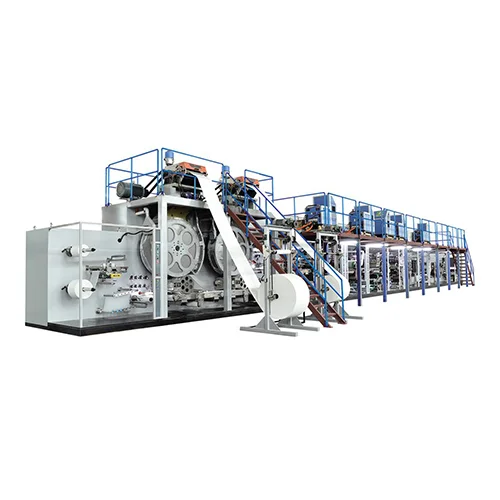
When purchasing a tissue paper making machine, one must know whether the offer includes only the folding machine or an integrated line.
The line may consist of:
- Jumbo roll unwinding units.
- Tension control and alignment system.
- Embossing unit.
- Folding unit.
- Counting system
- Cutting machine
- Conveyor belts
- Tissue bag packaging machine
- Box packaging machine
- Package sealing or welding system
- Date or batch coding printer
- Air compressor when equipment requires it.
- Electrical control and protection panel.
- Raw material and finished product handling equipment.
Comparing offers based on the machine name alone can be misleading, as a low-priced offer might lack equipment necessary to complete production.
Are You Considering Entering the Facial Tissue Manufacturing Industry?
Types of tissue machines by automation level
Semi-automatic machine
The semi-automatic machine performs the basic manufacturing stages, while some handling, packaging, or raw material feeding operations rely on workers.
It may be suitable for projects starting with limited capacity, but it requires analyzing labor costs, actual production rates, and the consistency of quality level.
Fully automatic machine
It links more stages within the production process and reduces manual intervention, which can help increase speed, improve product consistency, and minimize handling errors.
However, it requires:
- Larger initial investment.
- Appropriate electrical preparation.
- A team capable of operation and maintenance.
- Organizing the supply of raw materials and packaging materials.
- A market that can absorb the production volume.
Integrated automatic production line
It links manufacturing, cutting, conveying, and packaging within a single or semi-continuous production path. It is suitable for factories that require continuous commercial production and minimizing downtime between stages.
This does not mean that the largest line is always the best; the optimal choice is the one that operates at a good utilization rate and the factory continuously sells its production.
Key Specifications of a Tissue Paper Making Machine
Actual Production Capacity
The speed may be advertised by the number of sheets, packs, or meters per minute. However, the theoretical number is not enough to predict daily production.
It must be asked about:
- Stable speed with the type of paper used.
- Jumbo roll change time.
- Size or sheet count changeover time.
- Cleaning and maintenance intervals.
- Expected downtime rate.
- Actual shift production
- Number of workers required to operate the line.
Actual capacity is usually lower than maximum theoretical capacity due to stoppages, setup, and material changes.
Number of layers (ply)
It must be ensured that the machine has the capability to run the target number of layers, such as two or three, and that the feeding and embossing units are compatible with that.
Increasing the number of layers affects paper consumption, product thickness, package size, and its cost.
Jumbo roll width and diameter
The machine specifies a range for the width, diameter, and weight of the raw roll it can accept. It must be ensured that these dimensions are compatible with the materials available from suppliers.
Folded tissue size
The length and width of the tissue and the pack size must be specified, rather than using a general description like "regular size." Every package and carton box requires precise dimensions.
Number of tissues per pack
The number of sheets affects the pack length, production speed, raw material consumption, and selling price. It must be ensured that the count can be adjusted easily and accurately.
Embossing system
Ask about the type of embossing cylinders, the ease of changing them, and their compatibility with the paper thickness and desired design.
Control system
A clear operating interface helps in adjusting speed, counting, alerts, and tracking faults. The interface language, ease of saving settings, and the availability of technical manuals and diagrams should also be reviewed.
Electricity and compressed air requirements
Before placing an order, you should know
- Electrical voltage.
- Required power.
- Number of phases.
- Energy consumption.
- Whether the machine requires an air compressor.
- Ventilation specifications and operating environment requirements.
This information is essential for preparing the factory before the equipment arrives.
How Do You Choose the Right Machine for Your Project?
Define the Target Market
Are you targeting an affordable, widely distributed product, higher-quality tissues for hotels and restaurants, or a brand aimed at the retail sector?
The raw material, size, packaging, and required production capacity vary depending on the target custome
Start with the Sales Plan
Do not determine production capacity based on the largest machine you can afford. Calculate the expected monthly sales volume, then choose a capacity that allows for growth without leaving most of the production line’s capacity unused.
Define the Products Before Setting Up the Factory
Starting with facial tissues only is different from planning to produce facial tissues, rolls, and table napkins. Each section may require separate space, equipment, and workflow.
Review the Site Area
The space must accommodate:
- The machines and safety clearances.
- Jumbo roll storage.
- Packaging materials.
- Work-in-progress products.
- Finished products.
- Movement of workers and material-handling carts
- Maintenance area.
- Electricity, air compressor, and utilities.
Request a Production Sample
It is preferable to evaluate samples produced by a machine with the same specifications and using raw material similar to your intended material, while checking the folding, embossing, sheet count, and dimension
Cost of a Tissue Paper Making Machine
The cost varies depending on the product type, production capacity, level of automation, country of origin, and production line components. The price also differs depending on whether the quotation includes a standalone machine or a complete line with cutting, packing, and packaging equipme
The project budget is not limited to the cost of the machin
Therefore, it is preferable to request a customized quotation rather than relying on a general price that may not reflect the project’s needs.
How Does Al Baraka Help Set Up Your Project?
Al Baraka specializes in establishing and equipping tissue paper projects. Its services are not limited to supplying a tissue paper making machine, but also include assessing the project’s needs and integrating the machines into a production line that suits the product, capacity, space, and budget.
The company’s services include:
- Assistance in selecting the machines.
- Supplying facial tissue machines.
- Supplying tissue roll production lines.
- Providing cutting machines.
- Setting up packing and packaging systems.
- Supplying raw materials.
- Installing and commissioning the equipment.
- Training technical staff.
- Maintenance and technical support.
- Providing spare parts.
- Providing consultancy services and feasibility studies.
- Setting up tissue paper factories with an integrated system.
The importance of working with a specialized company lies in ensuring compatibility between the production, cutting, and packaging stages, rather than purchasing each machine from a different supplier and then facing difficulties with integration and operation
Frequently Asked Questions About Tissue Paper Making Machines
What Raw Materials Are Used in a Tissue Paper Machine?
Converting factories use jumbo paper rolls with the required specifications, along with packaging materials such as bags, cardboard boxes, and outer cartons.
Does the Machine Produce Paper from Pulp
Standard converting machines do not produce raw paper from pulp. Instead, they convert jumbo rolls into finished tissues. Producing paper from pulp requires a different and larger paper production line.
How Many Workers Does a Tissue Machine Require?
The number of workers depends on the level of automation and the methods used for roll loading, pack transfer, and packaging. Therefore, the labor requirements for each stage should be obtained from the supplier
Can the Machine Produce More Than One Size?
Some machines can produce different sizes within a specific range, but you should confirm the available sizes, changeover time, and the parts that need to be replaced.
What is the difference between automatic and semi-automatic machines?
An automatic machine reduces manual intervention and integrates more production stages. A semi-automatic machine relies on workers for some transfer, cutting, or packaging operations.
What Is the Most Important Criterion When Choosing a Machine?
There is no single criterion. The product type, production capacity, raw material quality, factory space, packaging method, sales plan, and technical support must all be compatible.
How Can I Get an Accurate Price?
Specify the product type, number of plies, size, required production capacity, packaging method, and the country where the line will be installed. Based on this information, a suitable quotation can be prepared.
Start Your Project with a Machine That Suits the Market, Not Simply the One with the Highest Specifications
The success of a tissue paper project does not begin with purchasing the largest machine, but with choosing a tissue paper making machine that produces the size, quality, and quantity the market can absorb, supported by a balanced packaging line, consistent raw materials, and a trained
Contact Al Baraka and specify the tissue type, production capacity, country, and available budget so that the appropriate machine or production line can be recommended and the project can be set up from the planning stage through installation and operation.
Read more articles:
Tissue Paper Production: A Complete Guide to Starting a Successful Business with Al Baraka