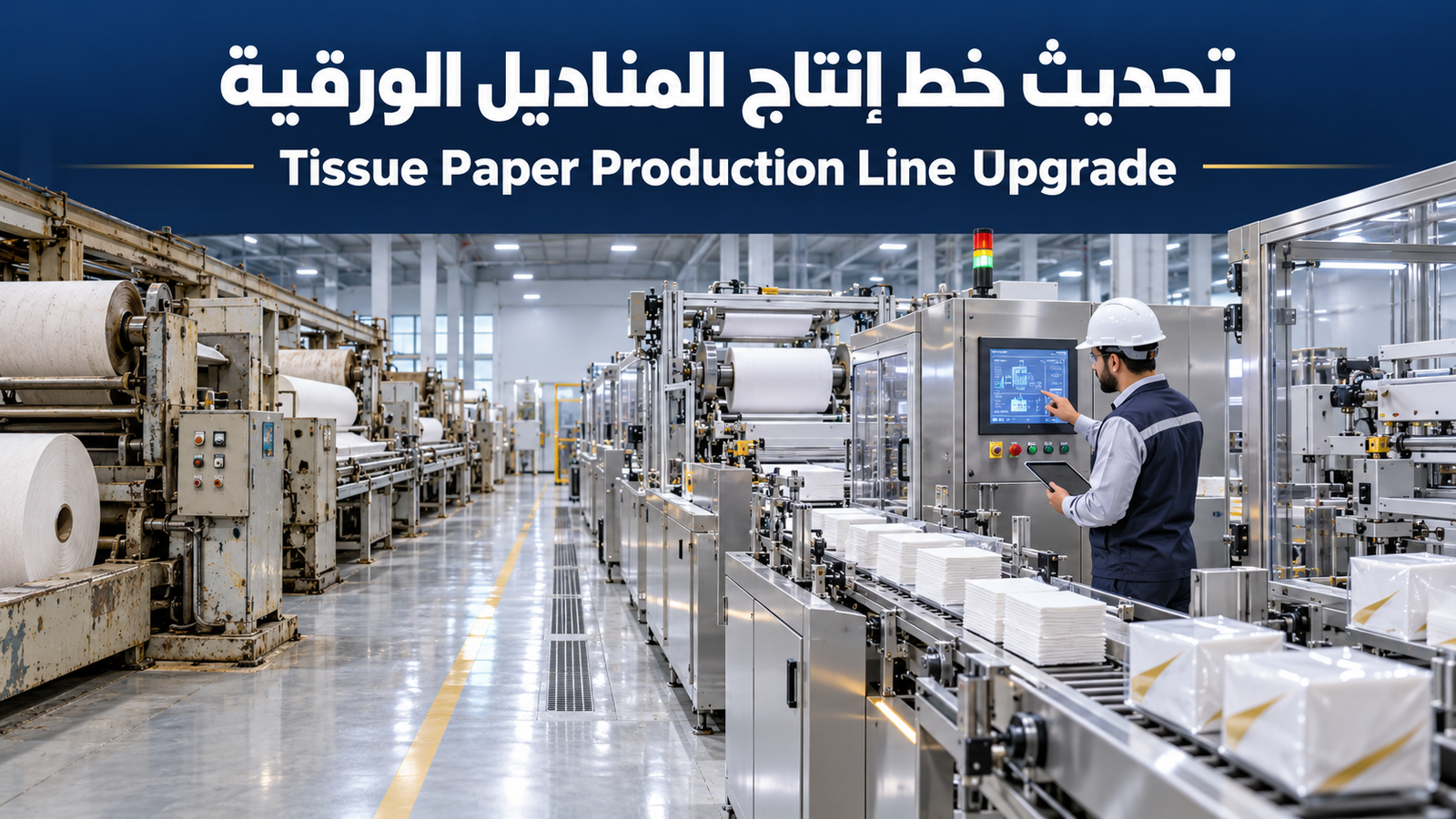
Modernization matters. A tissue paper production line upgrade may be the better investment when the main machines remain reliable but one stage—such as folding, cutting, packing, or control—limits total output. The right decision starts by identifying the bottleneck, measuring each unit’s performance, and comparing the practical result of modernization with full replacement.
Al Baraka helps factory owners assess existing line components and determine which units should be upgraded, integrated, or replaced.
What Signs Indicate That a Production Line Needs an Upgrade?
A line may continue operating while showing that it no longer matches current orders. Common indicators include:
- Repeated stoppages at one stage while the other machines remain stable.
- Converting equipment running faster than the cutting or packing section.
- Excessive manual handling between production stages.
- Increasing numbers of irregular packs or rejected products.
- Difficulty changing dimensions or introducing a new product format.
- No reliable data on operating speed, faults, downtime, or waste.
- Dependence on outdated controls or components that are difficult to source.
These signs do not automatically mean that the entire line must be replaced. A technical assessment determines whether the cause is one machine, poor synchronization between stages, or recurring faults that first require an appropriate maintenance programme.
Which Parts of a Tissue Line Can Be Modernized?
Before selecting any equipment, document the current line: product type, parent-roll width, dimensions, ply count, actual speed, stoppage rate, and packing method. This information allows the supplier to propose an operable configuration instead of an isolated machine that could create a new bottleneck.
Explore Al Baraka’s tissue paper manufacturing machines and production lines to review converting, cutting, packing, and wrapping options for different products.
يمكن مراجعة ماكينات تصنيع المناديل الورقية وخطوط الإنتاج للتعرف على وحدات التصنيع والقص والتعبئة المتاحة لمختلف المنتجات.
When Is Upgrading Better Than Buying a New Line?
Modernization may be practical when the mechanical structure is sound, the limitation is concentrated in one stage, and new technology can be integrated safely. It also suits factories that want to increase automation gradually or introduce another product without rebuilding the entire operating setup.
A new line may be the stronger option when faults affect several units, essential control components are unavailable, old operating speeds are far below the target capacity, or the equipment cannot produce the required formats. The decision should not depend on purchase price alone. Consider expected downtime, electrical and pneumatic modifications, training, maintenance, integration risk, and final product quality.
How Do You Request an Accurate Upgrade Quotation?
Provide photos and a video of the line while operating, plus each machine’s name, model, and manufacturing year when available. Include the factory layout, power supply, and compressed-air specifications. State the current and desired products, dimensions, actual output, target output, and the exact problem to be solved.
Clear information makes it easier to determine whether you need a new unit, a control modification, or a redesigned connection between stages. The quotation should also define the supply scope, installation, test runs, operator training, initial spare parts, and post-commissioning support.
Start with a Technical Assessment Before Buying
Purchasing a machine before diagnosing the cause of low output can simply move the bottleneck elsewhere. Contact Al Baraka with your current line specifications and production goal. The team can help you compare upgrade options, select compatible units, and arrange supply, installation, commissioning, training, and technical support.
FAQ
Can a semi-automatic tissue line become more automated?
It may be enough when that machine is the confirmed bottleneck. If limitations affect several stages, a phased modernization plan or a new line may be required.
Is Upgrading One Machine Enough?
It may be sufficient when that machine is the actual bottleneck. However, if the problems affect several production stages, a phased upgrade or a new production line may be require
What is needed for an initial assessment?
Provide line photos and video, machine specifications, product type, current and target output, dimensions, and a clear description of recurring faults or stoppages.