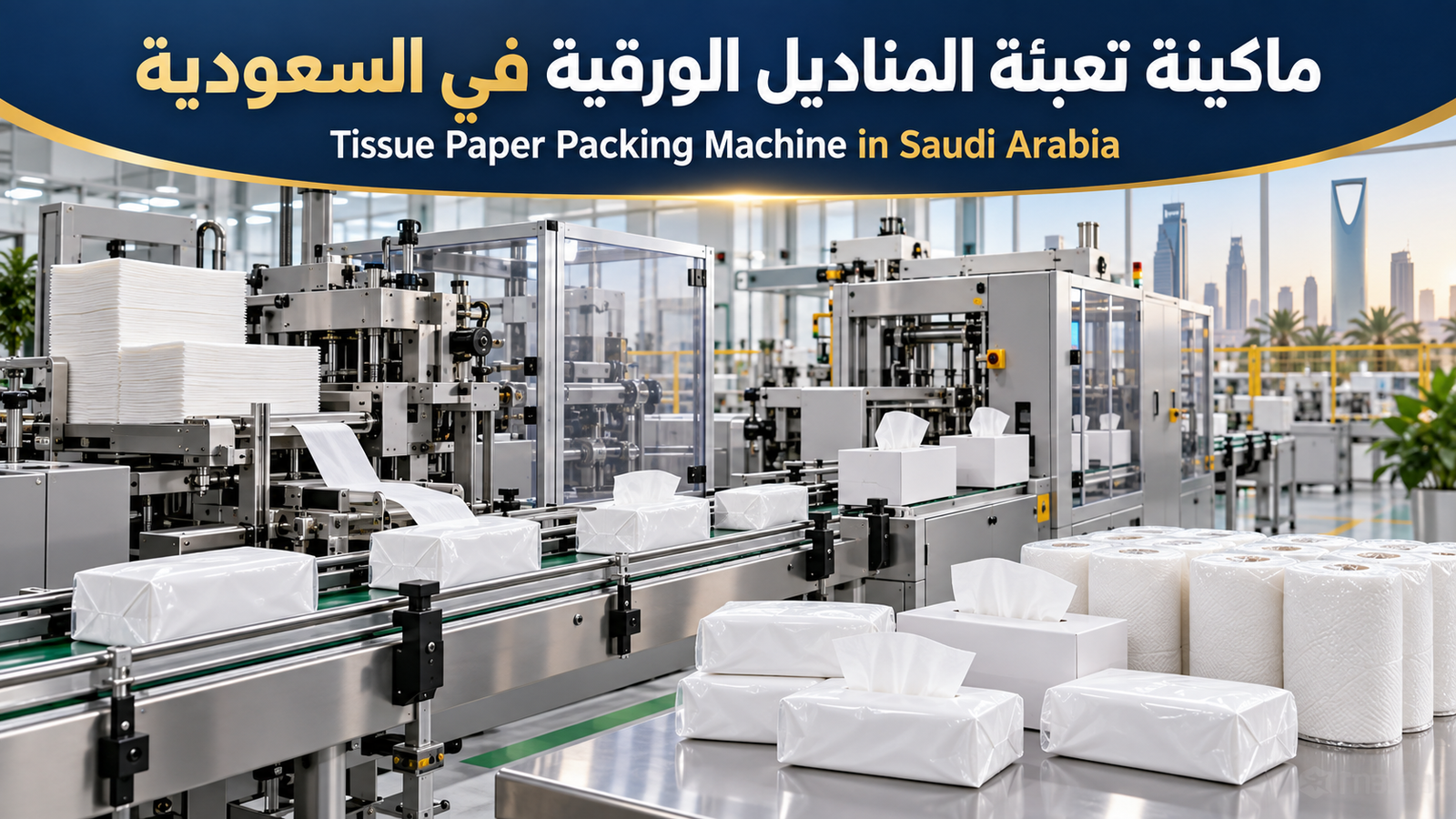
Selecting a tissue paper packing machine in Saudi Arabia is as important as choosing the converting machine. Folding and cutting may run efficiently, but slow or incompatible packing can create product accumulation, additional handling, and delayed orders.
Al Baraka helps factories select packaging equipment according to the tissue format, pack design, line speed, and available space. Its services include supply, installation, commissioning, operator training, and technical support. Explore tissue paper manufacturing machines and production lines before requesting a project-specific configuration.
For a relevant quotation: submit the desired pack image, dimensions, tissue count, production speed, and factory utilities.
Which Packing Machine Do You Need?
The correct solution depends on the sellable product:
- Soft-packed facial tissues: equipment receives folded tissue bundles, wraps them, and seals each pack.
- Facial tissue boxes: the solution may insert bundles into cartons before closing or sealing the boxes.
- Kitchen and toilet rolls: individual rolls or multi-roll bundles require suitable wrapping and sealing.
- Napkins and pocket tissues: feeding, counting, and closing methods vary with dimensions and pack quantity.
The packing machine must receive the product format and speed delivered by the converting equipment. Separate machines with mismatched capacities do not create a balanced production line.
What Causes a Packaging Bottleneck?
A bottleneck develops when tissue output exceeds the packing machine’s intake or when operators must manually arrange bundles between stages. Frequent size changes, unsuitable film, sensor faults, and sealing interruptions can also reduce practical capacity.
Compare the effective speed of the complete line, not the highest speed printed in one machine’s catalogue. Preventive tissue paper machine maintenance also supports reliable output.
Automatic or Semi-Automatic Packing?
A semi-automatic machine may suit controlled starting volumes or varied formats requiring manual flexibility. Automatic packing is more suitable for higher output and stable pack specifications, helping reduce handling and standardise sealing and order preparation.
The most automated option is not automatically the best investment. The choice should reflect demand, labour, space, production-machine speed, working hours, and planned expansion.
What Determines Packing Machine Price?
Price depends on product and pack type, speed, automation, supported dimensions, feeding and counting systems, sealing technology, printing, and accessories. Shipping, installation, commissioning, training, and spare-parts scope also affect the complete investment.
Align quotation scopes before comparing totals. A lower price may exclude conveyors, date printers, air compressors, or additional change parts required for commercial operation.
Seven Details Needed for an Accurate Proposal
Provide the supplier with:
- Tissue type and finished-product images.
- Folded tissue dimensions.
- Tissues, sheets, or pulls per pack.
- Packaging film or carton dimensions.
- Required output per minute or hour.
- Existing machinery, where applicable.
- Factory location, power, compressed air, and available space.
These details clarify whether the project needs a standalone machine or an automatic connection to the current line.
Request Equipment Compatible with Your Line
Contact Al Baraka to evaluate your product, production rate, and packaging format. The team can recommend equipment for upgrading an operating factory or importing and installing a tissue production line in Saudi Arabia, with supply, installation, commissioning, training, and technical support.
FAQ
Can a packing machine connect to an existing line?
Yes, when product dimensions, speed, feeding method, and control systems are compatible. A technical review is required first.
Can one machine pack every tissue product?
No. Soft packs, cartons, rolls, napkins, and pocket tissues require different handling and packaging configurations.
What information is needed for a price quotation?
Provide the product, pack, dimensions, speed, automation level, site utilities, and required technical services.